Not Every Address Is Created Equal
In the stock market, a blue-chip asset is simple to define: proven track record, limited supply, consistent demand, and structural reasons to hold value over time. Most investors spend years chasing that combination.
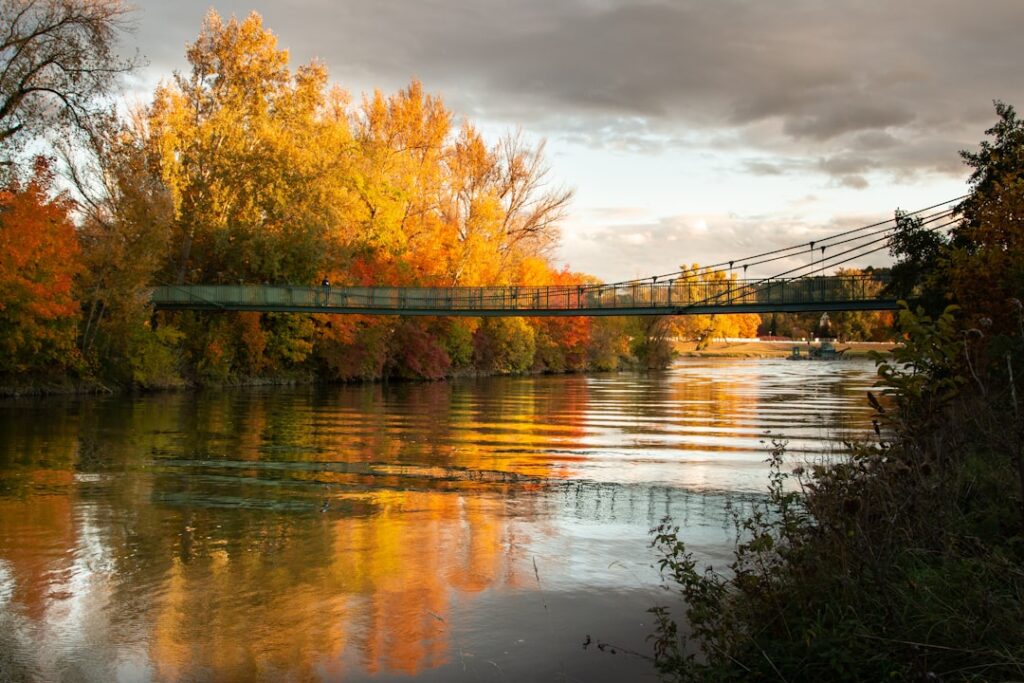
In Boise, it’s sitting right along the river.
The Boise River corridor — from the East End through Harris Ranch and out toward the Barber Valley — isn’t just a beautiful place to live. It’s one of the most structurally sound real estate positions in the entire Intermountain West. And most people who buy there don’t fully understand why until years after the fact.
I want to change that. Because wealth is made at acquisition. And understanding why an asset holds value is what separates a strategic buyer from someone who just got lucky.
Supply Is Fixed. That’s the Whole Story.
Most real estate markets can expand. Developers find raw land, build subdivisions, and add inventory. Supply grows to meet demand, and prices moderate. That’s how most of the Treasure Valley works.
The Boise River corridor doesn’t work that way.
The Greenbelt runs 25 miles along the river — a protected, public ribbon of open space that cannot be developed. The foothills press in from the north. Flood plain regulations constrain what can be built near the water. Harris Ranch, one of the last large planned communities with meaningful river and Greenbelt access, is nearing buildout.
There is no new land. There is no hidden inventory waiting to be unlocked. What exists along this corridor is essentially what will always exist.
Fixed supply plus growing demand is not a complicated equation. It’s the oldest principle in real estate, and the Boise River corridor is one of the clearest expressions of it in this market.
The Greenbelt Is Not a Perk. It’s a Price Driver.
Most agents will mention the Greenbelt as a lifestyle amenity — a nice trail for morning runs and weekend bike rides. That’s true. But that framing undersells what the Greenbelt actually does to property values.
Permanent open space adjacent to a neighborhood functions as a demand multiplier. It cannot be blocked, built on, or taken away. Buyers who want Greenbelt access know exactly where to look, and that concentrated demand flows into a limited number of properties year after year.
I’ve watched this play out across three decades in this market. Greenbelt-adjacent properties in the East End, in Barber Valley, along the north rim of Harris Ranch — they don’t just hold value during soft markets. They compress in value loss and recover faster. That’s not anecdote. That’s pattern recognition built over 30 years of watching this corridor perform.
Harris Ranch: A Case Study in Demand-Driven Premium
Harris Ranch deserves its own conversation because it’s the most recent large-scale example of what happens when you combine thoughtful planning, Greenbelt access, and constrained supply.
When Harris Ranch began developing in earnest, skeptics questioned the price premium. East Boise felt far to some buyers. The infrastructure was still catching up. The case for paying more wasn’t obvious to everyone.
It is now.
Harris Ranch has become one of the most sought-after addresses in the Treasure Valley — not because of marketing, but because the fundamentals were always there. River access. Greenbelt connectivity. Proximity to downtown without urban density. A neighborhood designed around outdoor living in a city that increasingly attracts people who came here specifically for that lifestyle.
As buildout approaches, resale inventory becomes the only inventory. That dynamic has one direction.
Who Is Buying Here — and Why It Matters
The buyer profile along the Boise River corridor has shifted meaningfully over the past decade. This isn’t just local move-up buyers anymore.
Remote workers from California, Washington, and the Pacific Northwest — people who sold appreciated assets and arrived with significant purchasing power — have specifically targeted river and Greenbelt-adjacent properties. They came from markets where walkable open space commands enormous premiums. They recognized the value here immediately, often before local buyers did.
That migration isn’t reversing. Boise’s quality of life, its outdoor access, its relative affordability compared to coastal metros — these are structural draws, not trends. The people moving here are choosing a lifestyle, and the Boise River corridor is the physical embodiment of that lifestyle.
When your buyer pool includes people who sold a $2M house in the Bay Area and are looking for the best version of Boise living, the demand floor for premium corridor properties stays elevated in ways that other submarkets simply don’t experience.
Most Agents Sell You a House. I Help You Buy an Asset.
Most agents will show you a home along the river and talk about the kitchen finishes and the square footage. I’ll show you the same home and walk you through the supply constraints, the Greenbelt adjacency premium, the flood plain boundaries, and the resale dynamics specific to that block.
That’s not a small difference. It’s the difference between buying a place to live and building a position in a blue-chip asset — while also building a life you love.
I use a good-better-best framework with every buyer I work with. Not every river corridor property is the same. Some are better positioned for long-term appreciation. Some carry risks that aren’t obvious from the listing sheet. Some are genuinely exceptional buys that a less experienced eye would pass over. My job is to help you see the difference before you sign, not after.
And sometimes the right advice is to wait. If the property isn’t right, if the timing doesn’t serve your financial position, I’ll tell you. That’s what an advisor does.
The Long View
Boise is not the same city it was 20 years ago. It’s not the same city it was 10 years ago. The growth has been real, the infrastructure investment has been real, and the national recognition — from livability rankings to remote work destination lists — has been real.
Through all of it, the Boise River corridor has remained the fixed point. The constant. The address that people work toward, not away from.
That’s what a blue-chip asset looks like. Not flashy. Not speculative. Just structurally sound, demand-driven, and supply-constrained in ways that compound quietly over time.
Build your life and your balance sheet in the same place. Along the river, those two things are the same decision.
Ready to Talk Strategy?
If you’re evaluating a move to the Boise River corridor — or trying to understand whether a specific property is positioned as well as it looks — let’s have a real conversation. No pressure, no pitch. Just 15 minutes to talk through what you’re looking at and whether the fundamentals support the decision. Schedule your 15-minute call here.